





Introduction
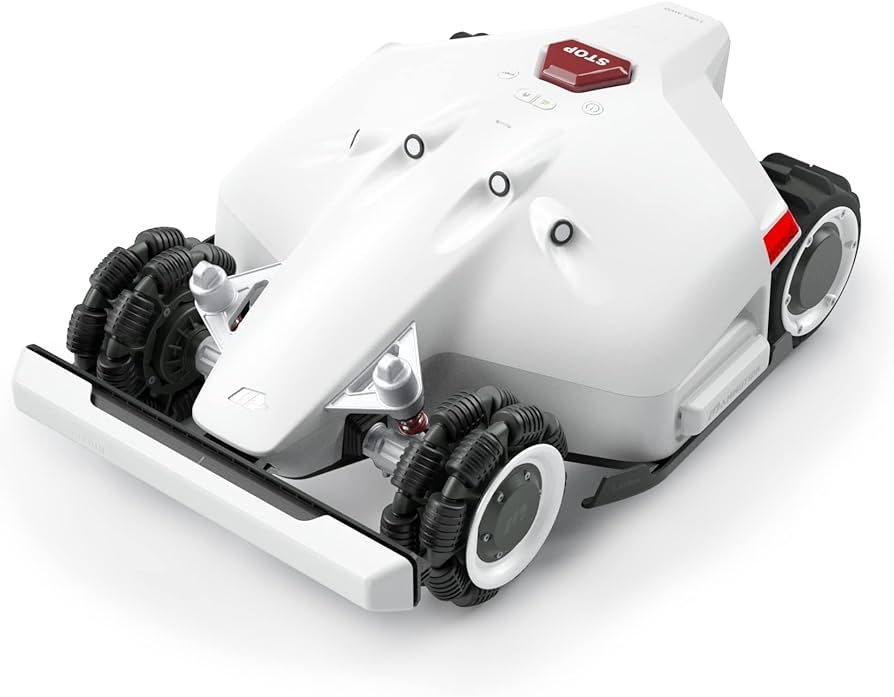
Robotic lawn mowers have become a major convenience for homeowners who want a consistently neat yard without dedicating hours to mowing. Among the many choices available, Luba from Mammotion and Husqvarna’s Automower lineup stand out for their contrasting philosophies and technologies. Both aim to deliver reliable, hands-off lawn care, yet they serve different types of users with different expectations. This article takes a detailed, approximately thousand-word look at how these two compare in installation, navigation, mowing performance, terrain handling, safety, long-term use, and overall value—without relying on any external websites.
Setup and Installation
One of the biggest differences between Luba and Husqvarna begins before the mower even starts its first cut. Luba’s wire-free concept is a major selling point. It typically uses advanced satellite-assisted positioning and digital mapping to define lawn boundaries. For homeowners who dislike digging, burying, and troubleshooting wires, this is a huge advantage. Setup becomes more digital and less physical, often involving driving the mower around the perimeter once to record the boundaries.
Husqvarna’s traditional approach uses boundary wire installed along the edges of the lawn and around obstacles. Although newer Husqvarna models may incorporate more advanced guidance features, the Automower system is rooted in wired boundaries. This requires more labor at the beginning but has a reputation for precision and reliability once placed. Some homeowners appreciate the hands-on setup because they know exactly where the mower will operate, while others find the process time-consuming or intimidating.
Navigation and Mapping
Luba’s navigation system is designed around structured mowing. Once it maps the lawn digitally, it can follow planned paths in straight, even lines. This resembles the predictable patterns of a manual push mower, which many users find satisfying. The mower can divide the yard into zones and tackle them in a logical sequence. Because of the positional tracking, Luba typically does not rely on random patterns, making mowing times shorter and more efficient.
Husqvarna, particularly its long-running Automower models, often uses a semi-random or fully random mowing pattern. Instead of straight lines, it moves unpredictably across the lawn. While this approach can take longer to cover the full area, it has its own strengths. Random mowing helps limit the formation of visible wheel tracks and avoids stressing the grass in a single direction. The mower eventually covers the entire yard through repeated passes, creating a smooth, even finish.
Read more:What Is Wowhead and Why It Is the Best Resource for World of Warcraft Playe
Cutting Performance
Both brands focus on frequent, gentle cutting rather than deep, infrequent cuts. Luba’s structured pathing allows it to mow efficiently, which can be beneficial for larger yards. It can deliver neatly aligned stripes and finish the job in less time. This is especially appealing to users who appreciate aesthetic patterns.
Husqvarna mowers prioritize consistency over patterns. Their cutting systems are lightweight and designed to clip only a tiny portion of grass per pass, which decomposes quickly as mulch. While the end result is highly even, it may lack the visible striping effect that Luba’s pathing creates. Husqvarna’s strength lies in years of refined engineering and a long history of trusted mowing performance across a wide range of conditions.
Terrain Handling
Terrain can dramatically influence which mower suits a property. Luba tends to be designed with a robust drive system that allows it to handle slopes, uneven areas, and rougher patches of ground. The structure of its wheels and drivetrain often reflects an emphasis on traction and stability, making it a practical choice for yards that are not perfectly flat.
Husqvarna has a strong reputation for handling slopes as well, particularly with certain Automower models that are built for traction. Their lighter bodies help them climb without sinking into soft ground. The boundary wire also helps maintain clear operational limits, preventing the mower from drifting into steep or unsafe zones. For very complicated terrain with tight passages or narrow corridors, Husqvarna’s long experience with navigation in wired systems can be an advantage.
Noise and Efficiency
Both Luba and Husqvarna mowers are designed to be much quieter than traditional gas mowers, often quiet enough to run at night without disturbing neighbors. Luba’s planned paths usually allow it to finish mowing faster, meaning less overall runtime for the same area. This can be important for homeowners who prefer their mower to run only during certain hours.
Husqvarna’s random pattern makes the mower run more frequently, but at extremely low noise levels. Many Automower owners allow them to operate throughout the day and even overnight. Since the mower makes continuous, gentle cuts, the lawn always looks freshly maintained.
Safety Features
Robotic mowers must be safe around people, pets, and obstacles. Luba’s mix of sensors typically includes features that detect collisions, lift events, and obstructions. Many models also allow digital “no-go” zones, keeping the mower out of gardens, flowerbeds, or delicate areas without installing physical wire. The precision of its guidance system helps avoid accidental wandering.
Husqvarna relies on decades of safety refinement. Automowers generally include multiple sensors, including tilt and lift detection, ultrasonic or proximity sensors on some models, and a protective housing around the blades. Boundary wires also act as a predictable restraint. For families with pets or children, many appreciate the proven, conservative safety behaviors Husqvarna mowers are known for.
Maintenance and Reliability
Maintenance for both brands includes replacing blades, cleaning debris, and occasionally updating software. However, the nature of their boundary systems influences long-term care. Luba’s wire-free design eliminates the possibility of wire breaks, which are a common maintenance task for wired systems. But digital navigation systems may require occasional recalibration in rare cases, especially if signal interference or major landscape changes occur.
Husqvarna mowers are extremely reliable in the long term, but boundary wires can break due to gardening tools, pets, or natural shifts in soil. Repairing a wire is not difficult, but it can be an inconvenience. On the other hand, once installed correctly, the system is highly stable and predictable. Husqvarna’s long history gives it a strong reputation for durability and longevity.
Cost and Long-Term Value
Price depends on model and lawn size. Luba’s technology-driven approach often places it in the mid to high range for robotic mowers, but the savings in installation time and the convenience of wire-free operation can justify the cost for many users.
Husqvarna’s Automowers range widely in price, from entry-level to high-end premium models. While the initial installation is more labor intensive, many users value the brand’s reputation, long service life, and strong dealer support. Over many years, both mowers can be cost-effective compared to paying for manual lawn care.
Conclusion
Choosing between Luba and Husqvarna depends heavily on what matters most to the homeowner. If you want a modern, wire-free system with structured mowing patterns and fast setup, Luba stands out as an appealing choice. If you value long-proven reliability, a robust support network, and a system that operates consistently thanks to physical boundaries, Husqvarna remains a top contender. Both can deliver excellent lawn results, but their methods—and the experience they offer—are distinctly different.
Read more: https://wowhead.co.uk/