






Introduction
Bed bug infestations can be stressful and confusing, especially when the signs are not obvious. One of the most common indicators of bed bugs is their droppings, often called bed bug poop. When these marks appear on wood surfaces such as bed frames, furniture, floors, or baseboards, people often mistake them for dirt, mold, or ink stains. Understanding what bed bug poop looks like on wood, why it appears there, and what it means is essential for early detection and control.
What Is Bed Bug Poop?
Bed bug poop is made up of digested blood. Because bed bugs feed only on blood, their waste appears dark brown or black. Unlike solid droppings from other insects, bed bug poop is usually liquid when first released and then dries into a stain. This is why it often looks like small ink dots or marker stains on surfaces.
On wood, these stains are especially noticeable because wood can absorb liquid waste, making the marks harder to remove.
Why Bed Bug Poop Appears on Wood
Bed bugs like to hide close to where people sleep. Wooden surfaces provide many cracks, joints, and rough areas that make perfect hiding spots. Bed frames, headboards, nightstands, and wooden flooring are common places where bed bugs live.
As bed bugs hide and rest in these areas, they defecate nearby. Over time, this leads to clusters of dark spots on wood, especially near seams, corners, and joints.
What Does Bed Bug Poop Look Like on Wood?
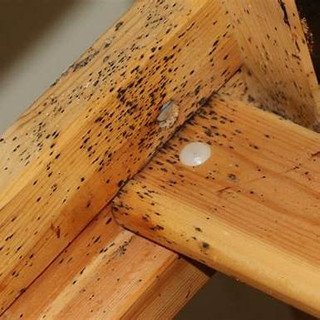
Bed bug poop on wood usually appears as:
- Small black or dark brown dots
- Ink-like stains that may bleed into the wood grain
- Smears if wiped with a damp cloth
- Clusters of spots rather than single marks
Unlike dirt, these spots do not flake off easily. If you lightly wipe them with a wet tissue, they may smear or turn reddish-brown, which is a strong sign they are bed bug droppings.
Common Places to Find Bed Bug Poop on Wood
Wooden items around sleeping areas are the most common locations. These include bed frames, headboards, slats, and footboards. Nightstands and dressers near the bed are also frequent sites.
Baseboards, wooden window frames, door frames, and hardwood floors can also show signs if the infestation spreads. Any wooden surface with cracks or joints can become a hiding and resting place for bed bugs.
How Bed Bug Poop Differs from Other Stains
It is easy to confuse bed bug poop with mold, pen ink, or droppings from other insects. However, there are key differences. Mold usually has a fuzzy or uneven texture and spreads in patches. Ink stains often have clear edges and appear in random locations.
Bed bug poop is usually found in patterns near hiding spots and sleeping areas. The stains are small, round, and concentrated, which helps distinguish them from other marks.
What Bed Bug Poop Indicates
Finding bed bug poop on wood is a strong sign of an active or past infestation. It means bed bugs have been feeding and hiding in that area. The more droppings you see, the larger or longer-lasting the infestation may be.
Early detection is important. Small amounts of droppings may indicate a recent infestation, while heavy staining often suggests bed bugs have been present for a long time.
Health and Hygiene Concerns
While bed bug poop itself is not known to spread diseases, it can still cause hygiene concerns. The stains can contribute to unpleasant odors in heavily infested areas. In some people, exposure to bed bug debris, including droppings, can trigger allergic reactions.
Keeping living spaces clean and addressing infestations quickly helps maintain a healthier indoor environment.
How to Clean Bed Bug Poop from Wood
Cleaning bed bug poop from wood can be challenging because the stains soak into the surface. Light stains may be removed by gently scrubbing with a damp cloth and mild cleaner. For unfinished or porous wood, stains may be harder to eliminate completely.
Sanding or refinishing may be required for deep stains, especially on furniture. However, cleaning alone does not solve the problem. If bed bugs are still present, new stains will continue to appear.
Preventing Further Damage
To prevent further staining, the source of the problem must be addressed. This includes inspecting wooden furniture, sealing cracks, and reducing clutter around sleeping areas. Protective covers and regular inspections can also help detect early signs before stains spread.
Preventive steps are most effective when combined with proper pest control measures.
When to Take Action
If you notice bed bug poop on wood, it is important to act quickly. Inspect nearby areas for other signs such as live bugs, shed skins, or bites on the skin. Early action can prevent the infestation from spreading to other rooms or furniture.
Ignoring these signs can lead to more extensive damage and harder-to-remove stains on wooden surfaces.
Conclusion
Bed bug poop on wood is one of the clearest signs of a bed bug problem. These dark, ink-like stains often appear near cracks, joints, and sleeping areas where bed bugs hide. Recognizing these marks early can help you take action before the infestation worsens. While cleaning can reduce visible stains, addressing the root cause is essential for long-term relief. Understanding what to look for empowers you to protect your home and maintain a clean, comfortable living space.
Read more: https://wowhead.co.uk/